What is an Airshed?
Watch this animated video to learn more about Airsheds in Alberta and what we do.
Alberta’s Airsheds
WCAS is one of 10 Airsheds in the Province of Alberta.
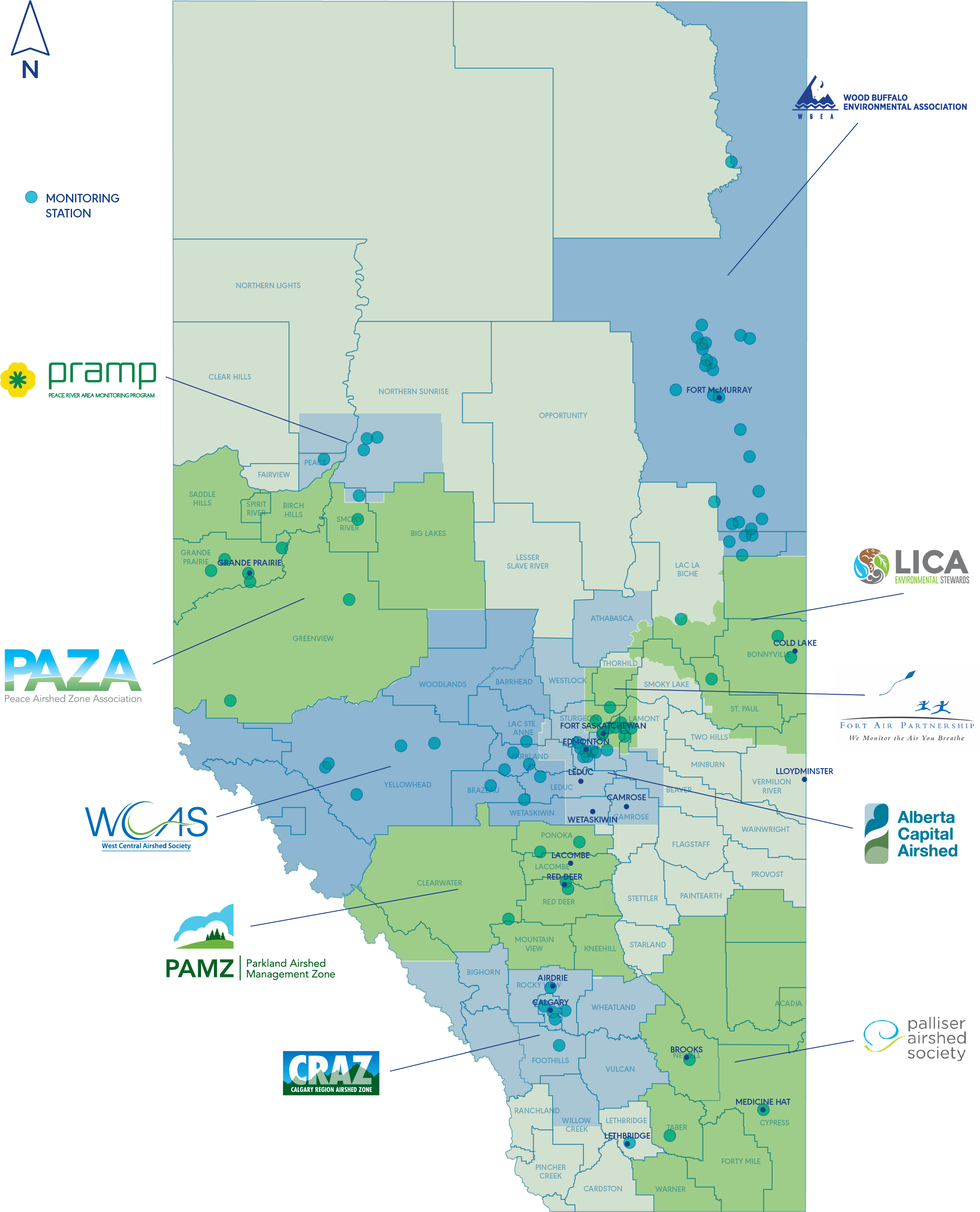
The West Central Airshed is a not-for-profit, multi-stakeholder organization that monitors, reports, evaluates and educates on air quality.
WCAS is the first of Alberta’s ten Airsheds, who together serve as the air monitoring partnership for Albertans. One of WCAS’ primary roles is to gather the information together from air quality monitoring data ensuring all stakeholders, including the public, have access to this important information. WCAS operates a broad network of air monitoring sites including permanent and portable continuous monitoring stations.
Value of WCAS
Multi-Stakeholder Collaboration
While our members have various mandates and interests regarding air quality, WCAS offers important partnerships and synergy where collaboration, engagement, and coalitions on topics of mutual interest can occur.
Credible Voice in the Region
WCAS is an important voice for its members by increasing awareness of regional air quality, bringing attention to air quality issues, and offering solutions and opportunities to improve air quality.
Expertise & Information
WCAS can provide air quality data and other information to its members and the public.
Responsive
WCAS is a member-focused organization that is also responsive to all public inquiries.

Globally, air pollution is responsible for an estimated 6.5 million deaths annually, or one in nine premature deaths every year.
This makes it the world’s largest environmental health risk, and among the largest global health risks according to the World Health Organization.
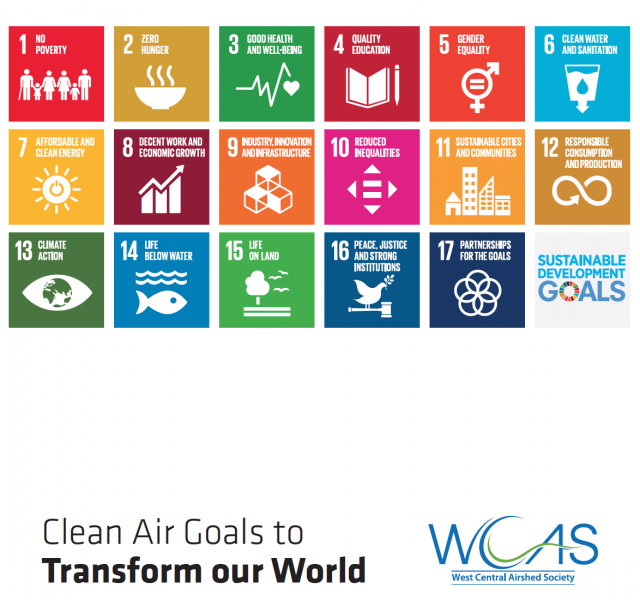
At WCAS, we join the call-to-action outlined by United Nations Sustainable Development Goals knowing that reducing air pollution and improving air quality will help ensure a better future for us all. Click on the brochure for more information.
As a not-for-profit organization, West Central Airshed Society is funded by our members and partners. Our members include the various air quality stakeholder sectors, including industry whose membership fees are based on air emissions. Our partners include Alberta Environment and Protected Areas who provide WCAS an annual grant to support our communications, engagement, and education programs.